BUSINESS PROCESS MANAGEMENT

Found this helpful? Share it with peers.
Introduction
Writing effective Standard Operating Procedures (SOPs) is one of the most practical ways to turn process knowledge into consistent execution. A good SOP does more than document tasks — it makes work repeatable, reduces ambiguity, and supports quality and compliance in day-to-day operations.
This guide is intentionally practical. Instead of offering a generic SOP template, it explains the steps that real organizations follow to create SOPs that people actually use — including how to define the purpose, write clear instructions, validate with stakeholders, and keep SOPs up to date over time.
If you are new to the topic, start with our overview of what Standard Operating Procedures are. Otherwise, continue below to learn how to write an SOP effectively.
Expert practice framing (ADONIS as proof of experience, not promotion)
In practice, SOPs are rarely written in isolation. Effective SOPs are typically derived from documented and analyzed business processes to ensure they reflect how work is actually performed across roles, systems, and handovers.
Organizations often use Business Process Management (BPM) tools such as ADONIS to connect process models with detailed execution instructions, responsibilities, and governance information. This approach helps ensure that SOPs remain consistent with underlying processes, easier to maintain, and aligned with organizational standards over time.
Standard operating procedure steps
1. Identify the Process
Begin by taking a comprehensive view of your organizational processes. Using a BPM tool like ADONIS can greatly aid in this endeavor by helping document, analyse, and optimize processes effectively. This involves understanding the broader process portfolio and aligning it with the organization’s needs. Once you have a clear overview, pinpoint the specific task or process you intend to standardize. Consider its significance in the larger organizational context, emphasizing why standardization is crucial for operational efficiency and desired outcomes.
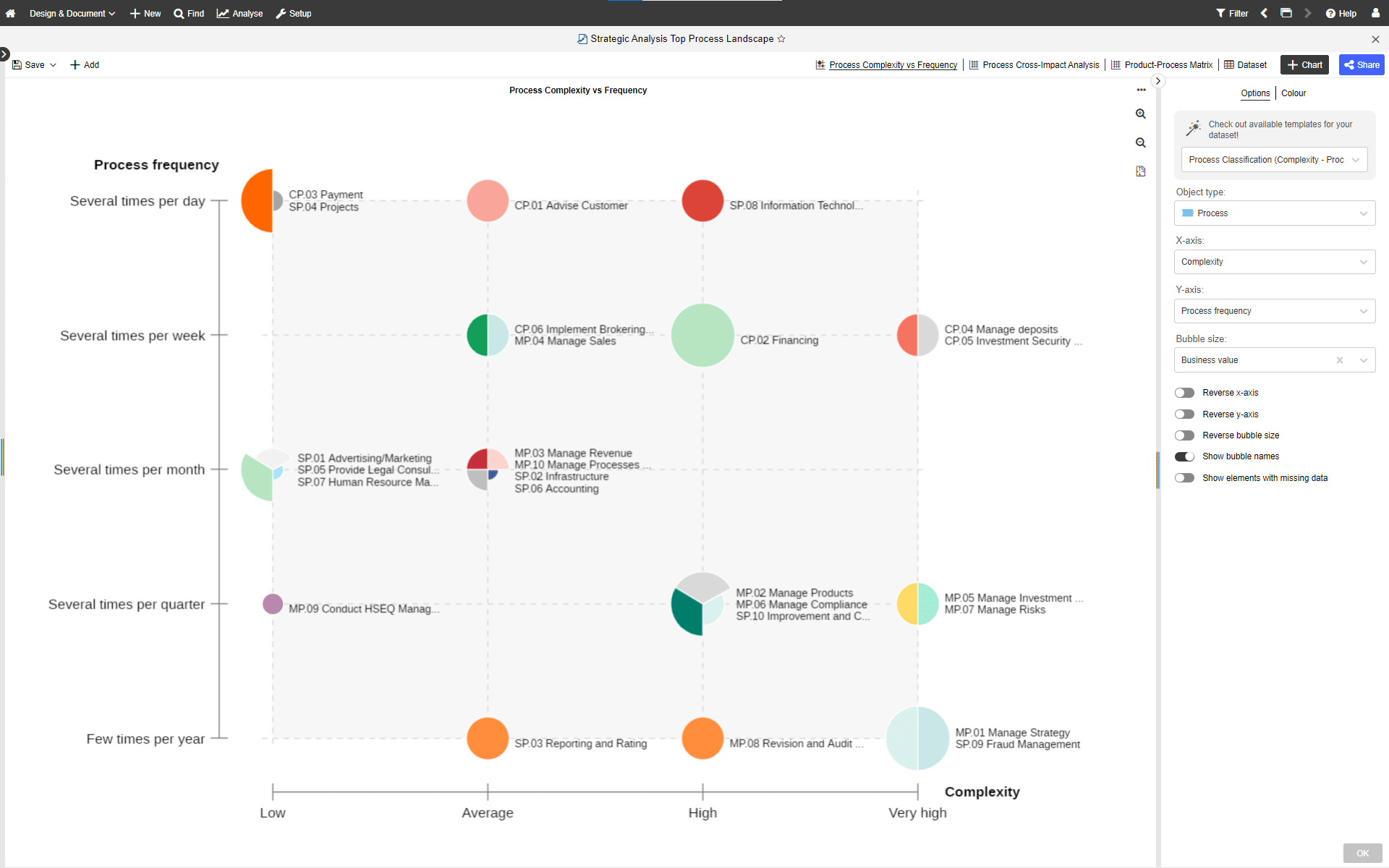
Use ADONIS to analyse your process portfolio and identify the processes to standardize
2. Define the Objective
The first step is to explicitly outline the purpose of the SOP. It’s essential to thoroughly grasp the process in question. Breaking it down into manageable, distinct steps is pivotal. Consider adopting best practices such as using BPMN 2.0 modelling standard to model business processes. This approach provides a visual representation that elucidates each step and its implications, offering a clear and comprehensive view. By modelling the business process, you gain insight into the sequence and impact of each step, facilitating a more informed and structured approach to defining the SOP’s objective.
Why this step matters
Many SOPs fail in practice because their objective is unclear or disconnected from the underlying process. When the purpose of an SOP is not explicitly defined, instructions tend to become either too generic or overly detailed, making them difficult to follow and maintain.
A clearly defined objective helps ensure that the SOP focuses on what truly matters for execution, quality, and compliance — and not on documenting unnecessary details.
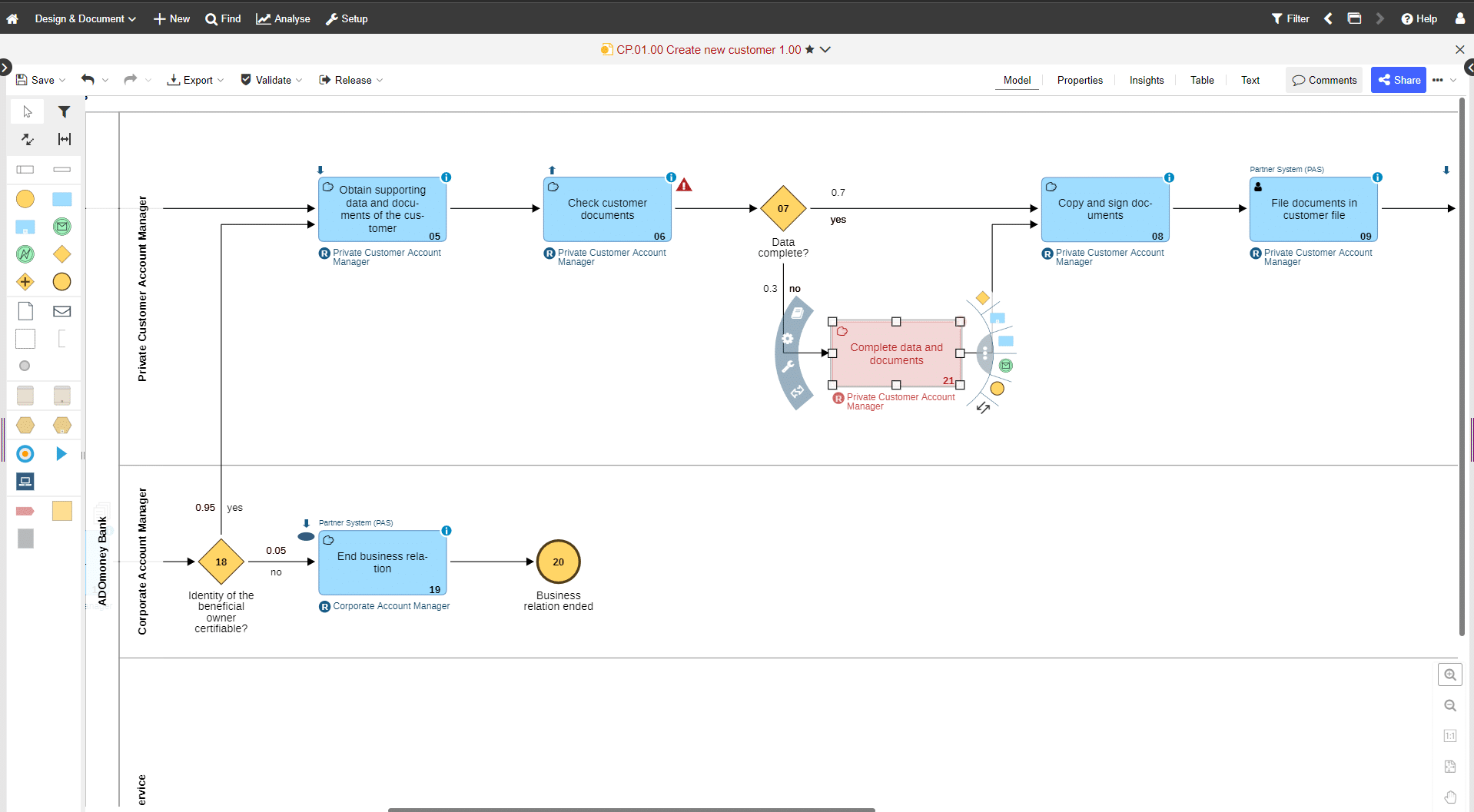
ADONIS fully supports BPMN 2.0 and is the best tool on the market for modelling and documenting business processes
3. Document Step-by-Step Instructions
Once you’ve identified the process and its objectives, proceed to document clear and sequential instructions. Ensure that each step is broken down into easily understandable actions. Use straightforward language that anyone within the organization can follow. Detail who performs each step, what actions they need to take, and how they should execute these actions.
Common mistake to avoid
A frequent mistake when documenting SOPs is assuming prior knowledge. Instructions that rely on implicit understanding or informal know-how may work for experienced employees, but they fail when onboarding new staff or ensuring consistency across teams.
Effective SOPs make execution explicit by clearly defining actions, responsibilities, and expected outcomes for each step.
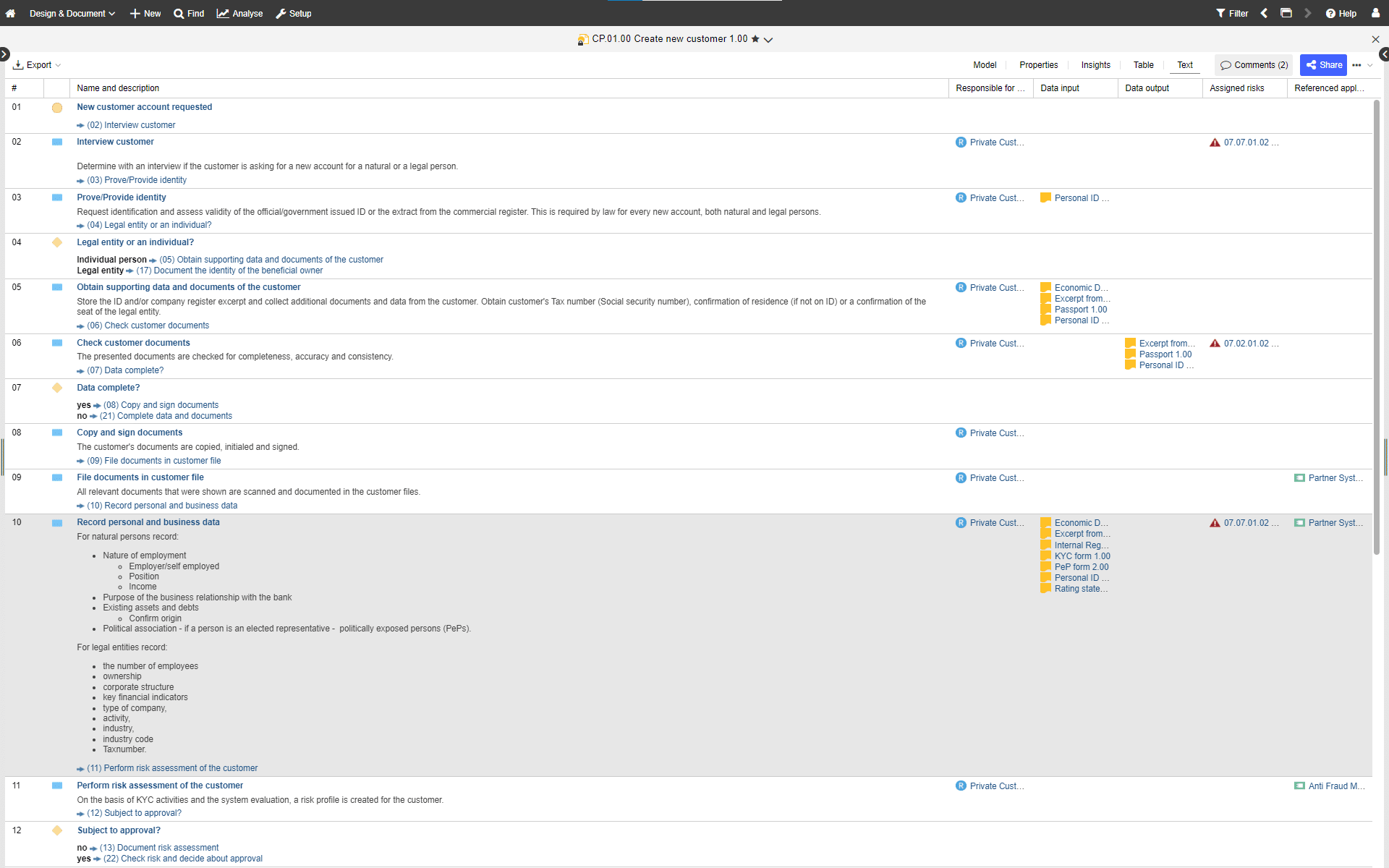
Use ADONIS to capture details of each text and write concise and precise instructions for each task execution
4. Include Visual Aids (if applicable)
Consider supplementing your written instructions with visual aids. Diagrams, flowcharts, or images can significantly enhance comprehension, especially for complex processes. Visual representations provide a clear overview and reinforce understanding by illustrating the flow and relationships between different steps.
5. Consider Safety and Quality Measures
Incorporate any necessary safety precautions or quality standards relevant to the process. Ensure that these measures are explicitly outlined within the SOP. Clear guidelines regarding safety and quality assurance are crucial to maintaining standards and mitigating risks.
6. Review and Validation
Why review and validation are critical
SOPs that are written without validation often look correct on paper but fail during execution. Involving subject-matter experts and actual process participants helps identify missing steps, unrealistic assumptions, and unclear responsibilities before the SOP is rolled out.
Validation turns SOPs from theoretical documents into executable guidance that reflects real working conditions.
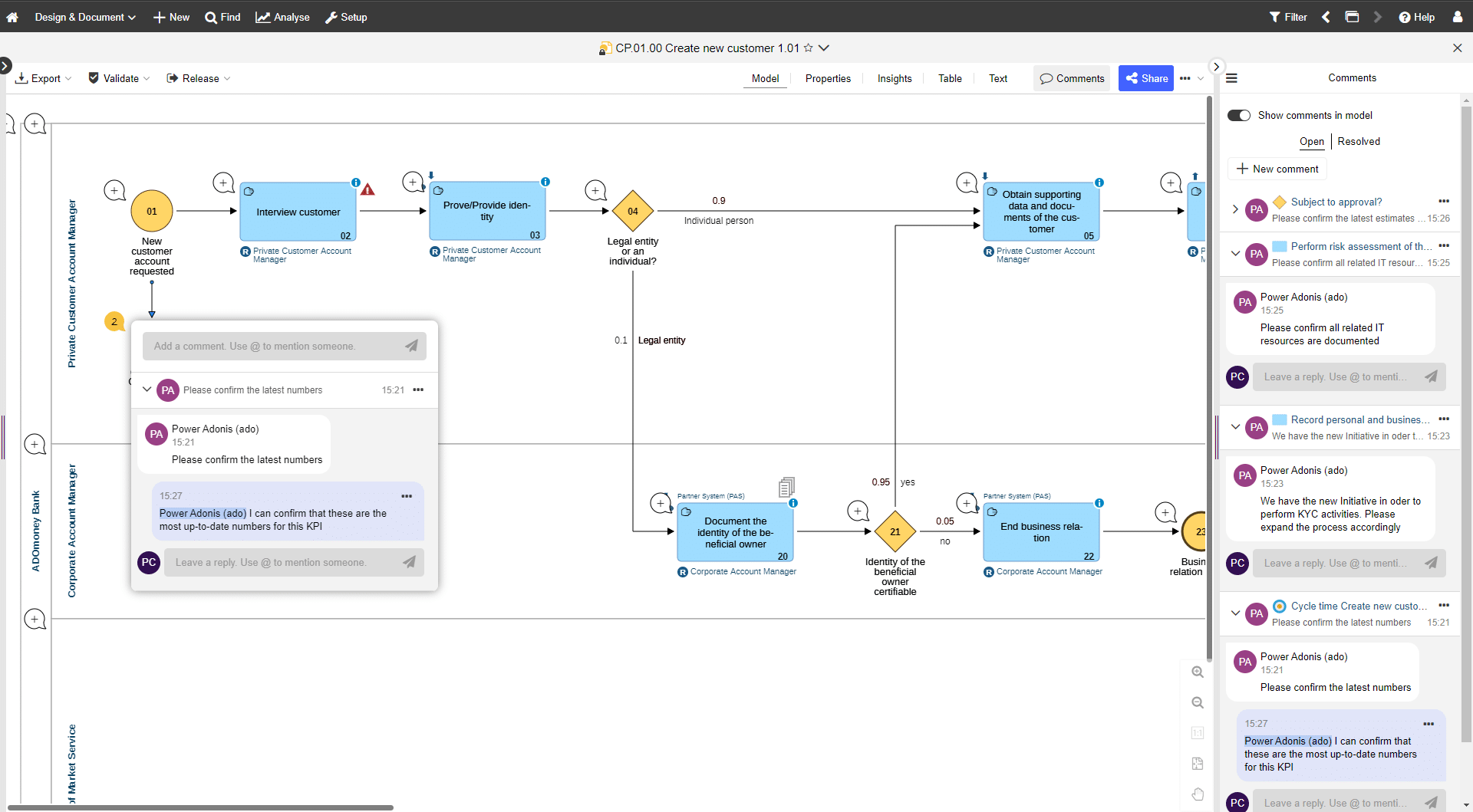
Collaborate live with your colleagues and other stakeholders within ADONIS
Hint: Visit our blog to find out how to promote BPM in your organization and achieve greater engagement in your process management initiatives..
7. Implement and Train
Once validated, implement the SOP within the organization. Conduct training sessions to ensure all individuals involved understand and can proficiently execute the procedures outlined in the SOP. Effective training is essential for successful SOP implementation.
8. Regular Review and Updates
Establish a system for regular reviews and updates of the SOP. As processes evolve or new insights emerge, ensure that the SOP remains up-to-date. Periodic revisions maintain the relevance and effectiveness of the procedures outlined.
9. Document Control
Implement a structured document control system for the SOP. Maintain version control to track revisions and ensure accessibility to the latest SOP by all relevant personnel.
10. Measure Effectiveness
Continuously monitor the effectiveness of the SOP in practice. Gather feedback and data to assess if the SOP is achieving its intended objectives. Regular evaluation allows for refinement and optimization of the SOP over time.
Summary
Well-written SOPs translate process knowledge into clear, executable instructions that support consistency, quality, and reliability in everyday operations.
By defining clear objectives, documenting steps explicitly, validating procedures with stakeholders, and reviewing them regularly, organizations can create SOPs that people actually follow. When SOPs are grounded in real processes and supported by proper governance, they become a practical tool for turning theoretical process designs into consistent execution.





Already got our weekly updates?